Wednesday, 25 December 2019

Study notes on academic ideas about job/ work stress


Study notes on academic ideas about job/work stress


Academic ideas are bolded


Kevin Daniels. “Rethinking job characteristics in work stress research” Human Relations DOI: 10.1177/0018726706064171 Volume 59(3): 267–290.

“In work stress research, consistent relationships between job characteristics and strain have not been established across methods for assessing job characteristics. By examining the methods used to assess job characteristics in work stress research, I argue that this is because different methods are assessing interrelated, yet distinct, facets of job characteristics: latent, perceived and enacted facets”;


Michael Calnan1, Emma Wadsworth3, Margaret May2, Andrew Smith3 and David Wainwright1. “Job strain, effort – reward imbalance, and stress at work: competing or complementary models?” Scand J Public Health 32.

“The social epidemiological approach for explaining the causes of work-related stress (1), suggests that certain work characteristics elevate the susceptibility of the worker to the risk of job strain with negative consequences for mental and physical health. This social epidemiological approach has spawned a number of different and competing social epidemiological models”;

“The demand control model (2) considers the influence and interrelationship of three concepts, which are ‘job demands’, ‘job control’, and ‘social support at work’. The ‘job demands’ dimension examines the pace and intensity of work. The model predicts that job strain is not simply a function of job demands, but also depends on the amount of control the worker has over work and the skill and variety involved. Work that combines high demands with low control is predicted to cause a high state of job strain with the subsequent risk of psychological and physical morbidity”;


Sam Loc Wallace, Jayoung Lee and Sang Min Lee. “job stress, coping strategies, and burnout among abuse-specific counsellors” journal of employment counseling • September 2010 • Volume 47.

“Coping strategies are the ways in which individuals choose to respond to stressful situations (Welbourne, Eggerth, Hartley, Andrew, & Sanchez, 2007). Parkes (1994) suggested that personal characteristics such as coping strategies can mediate or moderate relations between job demands (stressors) and job strains (burnout symptoms). Individual differences in coping strategies have been theorized to derive from traditional personality dimensions and have been supported in several studies (Armstrong-Strassen, 2004; Carver, Scheier, & Weintraub, 1989; McCormick, Dowd, Quirk, & Zegarra, 1998). Effective coping strategies may play an important role in reducing stress levels and increasing job satisfaction”;

“Specifically, using the Baron and Kenny’s (1986) mediation and moderation model, we analyzed for identifying mediating and moderating relationships between coping strategies and counselor burnout as they relate to types and severity of job stress as perceived by abuse-specific counsellors”;


Tuesday, 24 December 2019

Study notes on academic ideas about corporate culture


Study notes on academic ideas about corporate culture


Academic ideas are bolded


Jeffrey J Bagraim. “Organisational psychology and workplace control: the instrumentality of corporate culture” S. Afr. J. Psychol. 200 I, 31 (3).

“Smircich (1983) drew a clear distinction between two approaches to understanding organisational culture. One approach assumes that organisational culture is a root metaphor. Organisational cognition, organisational symbolism, and organisational psycho-dynamics are perspectives within this understanding. The other approach assumes that organisational culture is a variable. This approach includes the perspectives of cross-cultural management (culture as an independent variable) and corporate culture (culture as an internal variable)”;

“The corporate culture perspective adopts a structural functionalist position. It emphasises that organisations are producers of culture that maintain social structures. The cultural context of organisations is recognised but the emphasis is placed on social and cultural qualities that develop within organisations and represent the collective consensus of organisational members (Smircich, 1983). This approach implies that organisational culture is something that the organisation "has", as opposed to something that the organisation "is" (Smircich, 1983)”;

“An organizational culture is typically termed "strong" if it is distinctive and characterised by significant consensus between organisational members regarding their beliefs, values, norms and ideals (Robbins, 1996). A "strong" culture therefore effectively communicates to employees how they should behave and that acceptance of this will be beneficial to the organisation, customers and society. Communications regarding excellence, customer service, loyalty, and teamwork all fall into this category. Top management assume the role of primary force in the formation, maintenance, assessment and change of organisational culture (Legge, 1995); "the unique and essential function of leadership is the manipulation of culture" (Schein, 1985, p. 317)”;


Jesper B. S0rensen. “The Strength of Corporate Culture and the Reliability of Firm Performance” Administrative Science Quarterly, 47 (2002): 70-91.

“Much popular and scholarly attention has been focused on the hypothesis that strong cultures, defined as "a set of norms and values that are widely shared and strongly held throughout the organization" (O'Reilly and Chatman,1 996: 166), enhance firm performance. This hypothesis is based on the intuitively powerful idea that organizations benefit from having highly motivated employees dedicated to common goals (e.g., Peters and Waterman, 1982; Deal and Kennedy, 1982; Kotter and Heskett, 1992). In particular the performance benefits of a strong corporate culture are thought to derive from three consequences of having widely shared and strongly held norms and values: enhanced coordination and control within the firm, improved goal alignment between the firm and its members, and increased employee effort”;


Andrew Klein, (2011),"Corporate culture: its value as a resource for competitive advantage", Journal of Business Strategy, Vol. 32 Iss: 2 pp. 21 – 28.

“... organizational contingency theories and strategic choice models (Child, 1972), posit that resources and type of strategy interact to produce results. Pfeffer notes, for example: ‘‘The conventional wisdom, taught in numerous human resource courses in business schools and frequently stated in articles, holds that management practices need to be contingent on the firm’s particular product strategy’’ (Pfeffer, 1998, p. 56). Following this conventional wisdom, organizations employ both tangible resources, such as financial and physical assets, and intangible resources, such as human resources and corporate culture, in the formulation and implementation of their generic strategic type (Porter, 1985; Miles and Snow, 1978). Intangible are more likely than tangible resources to yield a competitive advantage because they tend to have VRIO characteristics – they are valuable, rare and difficult to imitate (Barney, 1986; Hamel and Prahalad, 1994). Socially complex resources such as corporate culture are unique”;


Study notes on academic ideas about employee morale


Study notes on academic ideas about employee morale


Academic ideas are bolded


Brunetto, Y., Farr-Wharton, R. and Shacklock, K. (2010) ‘The impact of supervisor–subordinate relationships on morale: implications for public and private sector nurses’ commitment’. Human Resource Management Journal 20: 2, 206–225.

“A high-quality LMX is evident by high levels of satisfaction with the supervisor–subordinate relationship, probably as a result of increased access to relevant information and resources as well as an empowering relationship as a result of supervisors allocating increased levels of organisational resources (time) towards each subordinate (Sparrowe and Linden, 1997). In addition, when high-quality LMX relationships are present, supervisors provide employees with meaningful feedback (consequently increasing their access to relevant information about the organisational changes), and delegate decisionmaking and power (Wayne et al., 1997; Yrie et al., 2003). Hence, using the LMX theoretical frame, it seems likely that the quality of supervisor–subordinate relationship could affect nurses’ perceptions of morale”;


David L. Weakliem University of Connecticut, Stephen J. Frenkel, Australian Graduate School of Management. “Morale and Workplace Performance” Work and Occupations Volume 33 Number 3 August 2006 335-361.

“The present research is designed to fill this gap by examining the relationship between workers’ morale and productivity using the Australian Workplace Industrial Relations Survey (AWIRS), a representative sample of workplaces with more than 20 employees. An important feature of the AWIRS is that it obtains information from both managers and a sample of workers at each workplace. Reports of productivity are taken from the managerial survey, whereas estimates of workplace morale are obtained from the employee survey”;


David A. Patterson-Silver Wolf (Adelv unegv Waya)1, Catherine N. Dulmus2, Eugene Maguin3, and Maria Cristalli4. “Factors Influencing Worker Morale: Evaluating Provider Demographics, Workplace Environment and Using ESTs” Research on Social Work Practice 23(3) 304-310.

“High worker morale has been associated with workplace stability, supportive managers, and clear roles, while low morale has been associated with insufficient staffing levels, high levels of verbal abuse, risk of violence, and workers feeling they have no voice in the workplace (Bowers, Allan, Simpson, Jones, & Whittington, 2009; Totman, Hundt, Wearn, Paul, & Johnson, 2011). In a systematic review of strategies to improve morale among staff working in mental health settings, Gilbody, Cahill, Barkham, Richards, Bee, and Glanville (2006) found that educational interventions intended to improve staff’s skills and competency along with work-based social supports increased worker morale”;

Study notes on academic ideas about employee turnover


Study notes on academic ideas about employee turnover


Academic ideas are bolded


Tracey, J. B., & Hinkin, T. R. (2008). Contextual factors and cost profiles associated with employee [Electronic version]. Cornell Hospitality Quarterly, 49(1), 12-27. Retrieved [insert date], from Cornell University, School of Hospitality Administration site: http://scholarship.sha.cornell.edu/articles/214/.

“Research has identified the following five major cost categories that contribute to the total cost of replacing an employee: predeparture, recruitment, selection, orientation and training, and lost productivity (for a more detailed discussion of these categories, see Hinkin and Tracey 2000, 2006)”;


Aharon Tziner Univetsitb de Mon trkal Assa Birat i Bar-l/an University. “ASSESSING EMPLOYEE TURNOVER COSTS: A REVISED APPROACH” Human Resource Management Review, Volume 6, Number 2, 1996, pages 113-122.

“To the best of our knowledge, Cascio (1991) would seem to have made the most significant contribution in this respect, demonstrating the extent to which turnover costs are significant. His turnover costing model consists of several categories of expenses. Separation costs, with the following components:
l exit interview- the financial value of both the inteviewer’s time and the departing employee’s time;
l administrative-the cost incurred by the activities of removing an employee from the payroll, termination of benefits, and the return of company equipment; and
l seuerunce pay-the compensation paid to a departing employee.
Replacement costs, including: advertising position availability in various media; processing candidate applications and reviewing references; conducting screening interviews; assessing candidates’ compatibility with the vacant job; holding decision making meetings; and medical examinations and orientation activities for the hired employee.
Training costs, including: disseminating relevant information for organizational socialization, organizational regulations, norms of conduct and performance, and core organizational values; attending formal training programs; and participation in on-the-job training activities”;


Rodger W. Griffeth Georgia State University Peter W. Hom  Arizona State University Stefan Gaertner Georgia State University. “A Meta-Analysis of Antecedents and Correlates of Employee Turnover: Update, Moderator Tests, and Research Implications for the Next Millennium” JOURNAL OF MANAGEMENT, VOL. 26, NO. 3, 2000.

“As we enter the new millennium, a final review of turnover research conducted in the 20th century is warranted. Specifically, this review updates and refines our previous meta-analysis (Hom & Griffeth, 1995). Until that time, the 1995 meta-analysis represented a more thorough review than other turnover meta-analyses, which generally examined a few predictors. It also extended Cotton and Tuttle’s (1986) first large-scale meta-analysis by estimating the size and variability of predictor-quit relationships rather than only their statistical reliability. The current meta-analysis summarizes the numerous studies published since Hom and Griffeth’s (1995) review including all studies conducted during the past decade. Given 500 correlations from 42 studies in the 1990s, this updated meta-analysis may change Hom and Griffeth’s meta-analytic estimates. Going beyond Hom and Griffeth’s review (Hom & Griffeth, 1995), we further specify various moderators of antecedent-turnover relationships”;

Study notes on academic ideas about gentrification


Study notes on academic ideas about gentrification


Academic ideas are bolded


Richard Cimino. “Neighborhoods, Niches, and Networks: The Religious
Ecology of Gentrification” City & Community 10:2 June 2011.

“The few studies of gentrification that deal even marginally with religious institutions have tended to see this process of neighborhood change as contributing toward secularization. A 1993 study of major Canadian cities found that gentrified districts had the strongest correlation with religious disaffiliation. Authors David Ley and R. Bruce Martin (1993) not only argue that members of the creative class moving into gentrified zones are secular to begin with, but that the establishments (such as restaurants and entertainment venues) they bring into neighborhoods force congregations out of these areas. In his research on the creative class, Florida argues that residents of cities (often in the most gentrified neighborhoods) and states catering to this class tend to tend to embrace secular values or “opt to forego church for less traditional methods of spiritual or religious practice”
(Florida, 2008, p. 171, 2010)”;

“The literature examining the cultural aspects of gentrification may not deal explicitly with religion, but such work provides the researcher with clues about how its impact on community life and personal identity may relate to religious institutions. Lloyd’s ethnography of Wicker Park (2006), a gentrified section of Chicago with many similarities to Williamsburg, looks at how such areas form central nodes in the postindustrial urban and economic landscape of global cities, even as they are portrayed as bohemian and outside of the mainstream. Lloyd notes that Wicker Park forms a “neo-Bohemia,” serving as an enclave for artists and the “creative class,” while catering to the entertainment needs of cosmopolitan middle-class consumers. New research suggests that a side effect of the proliferation of consumption-related cultural activities is that individuals “incrementally withdraw from the usage of religiously charged intermediaries in order to connect socially” (Hirschle, 2010, p. 12)”;


Nilgun Ergun. “Gentrification in Istanbul” Cities, Vol. 21, No. 5, p. 391–405, 2004.

“Some researchers viewed the characteristics of the gentrifiers to be of greater importance in the understanding of gentrification. Hamnett (1984) states that ‘‘gentrification is a physical, economic, social and cultural phenomenon, commonly involves the invasion by middle-class or higher income groups of previously working-class neighbourhoods or multi-occupied ‘‘twilight areas’’ and the replacement or displacement of many of the original occupants.’’ Ley (1986, 1992, 1996), Filion (1991), Van Kempen and Van Weesep (1994), Bondi (1999) have suggested modifications in the socio-cultural structure and residential policies as other significant factors that might lead to a process of gentrification. The modifications in the socio-cultural structure mean displacement of the original occupants of a rehabilitated settlement. Members of the middle-class, working in the city center, want to live in the inner city in order to be
closer to their offices and socio-cultural activities and also want to be closer to those similar to themselves”;


ROBERTO A. FIGUEROA,* Regina, Canada. “A Housing-based Delineation of Gentrificatioti: a Small Area Analysis of Regina, Canada” Geoforum, Vol. 26, No. 2, pp. 225-236,1995.

“Gentrification has meant both a social and physical upgrading of neighbourhoods. Low status neighbourhoods have become inhabited by middle to high status groups, thereby changing the social environment . Gentrifiers have renovated and rehabilitated old and deteriorated housing. Such financial reinvestment has led to substantial increases in house prices
and rentals. At the same time, the increasing erosion of affordable rental and owned housing has displaced many renters and owners”;


Fran Tonkiss (2018) Other gentrifications, City, 22:3, 321-323, DOI: 10.1080/13604813.2018.1484638.

 “Work on dynamics of gentrification in cities of the global south has underlined both the primacy of state-led gentrification and the role of corporate investment in re-shaping these urban contexts (see Lees, Shin, and Lo´pez-Morales 2015, 2016). Beirut offers a telling site in which to think about these intersections of state and corporate power, in a city which resists easy typification in developmental terms”;

Monday, 23 December 2019

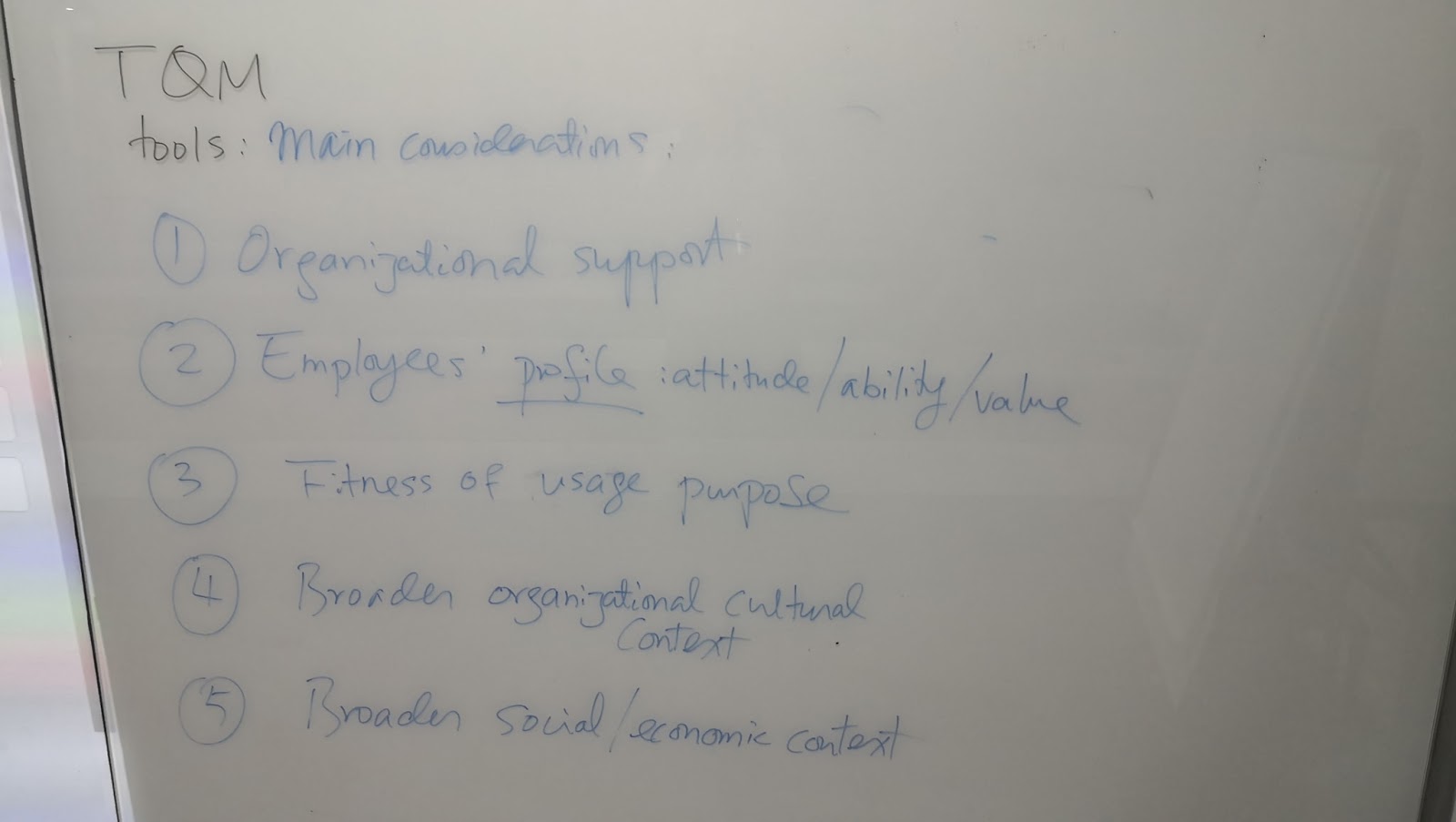
Lecture notes on TQM tools

Lecture notes on TQM tools

Note 1


Note 2


Note 3


Note 4


Note 5

TQM tools: application domains:
1. QC
2. QA
3. Process improvements
4. Process management
5. Performance measurements
6. Employee empowerment [group based]

Friday, 20 December 2019

Study notes on academic ideas about urban renewal


Study notes on academic ideas about urban renewal


Academic ideas are bolded

David Webb (2010): Rethinking the Role of Markets in Urban Renewal: The Housing Market Renewal Initiative in England, Housing, Theory and Society, 27:4, 313-331.

“Accounts of urban renewal that rely on the gentrification heuristic exaggerate the distinction between state and capital. Consequently, they tend to promote the state’s role as a counterbalance to market capital and warn against the outcome of a “neoliberal” politics, which is responsible for serving market interests through public–private partnership”;


Marietta Haffner Æ Marja Elsinga. “Deadlocks and breakthroughs in urban renewal: a network analysis in Amsterdam” J Hous and the Built Environ (2009) 24:147–165.

“In the past, urban renewal was dominated by hierarchical government steering, though there were signs of network governance at the local level”;

“The joint non-hierarchical responsibility of local actors for urban renewal is currently reflected in the fact that the local actors are involved in a local urban renewal network. This situation is rather new and dynamic, which implies that actors are changing as are the rules of the game”;


Liza Weinstein Northeastern University and  Xuefei Ren∗ Michigan State University. “The Changing Right to the City: Urban Renewal and Housing Rights in Globalizing Shanghai and Mumbai” City & Community 8:4 December 2009.

“Issues of residential displacement and housing security have long been central to inquiries in urban sociology, whether displacements were caused by “natural” processes of invasion and succession (Burgess, 1967), by the federal bulldozers of urban renewal (Gans, 1962; Jacobs, 1961), or by the surplus value extraction associated with gentrification (Smith, 1979; Zukin, 1982). Frequently recast in the frame of global and globalizing cities, more recent inquiries into residential displacements and housing rights have tended to employ a political economy perspective, examining the decisions of governments, local elites, and those acting on behalf of global capital to promote higher value land uses, thus facilitating the residential and employment displacement of the city’s lower income residents (Logan and Molotch, 2007; Fainstein, 2001; Harvey, 2003b)”;

“Over the past decade, several scholars have posited that cities—global or globalizing cities in particular—have become strategic sites at which new forms of citizenship are enacted (Isin, 2000; Holston, 2001, 2008; Chatterjee, 2006; Sassen, 2006). While conceptions of citizenship had, until recently, referred almost exclusively to the rights and obligations associated with membership in a nation-state, these scholars have highlighted political communities at the subnational and supranational scales and thus questioned the exclusivity of national-level citizenship. They suggest that as strategic nodes of global flows of people, capital, and information, global cities are among the sites at which the contradictions and inequalities intrinsic to global capitalism materialize in their most concrete forms. These conditions have rendered global cities as both the context for disadvantaged groups to renegotiate political rights and the substance of their renegotiations (Holston, 2001, 2008)”;


ROELOF VERHAGE. “Renewing urban renewal in France, the UK and the Netherlands: Introduction” Journal of Housing and the Built Environment (2005) 20: 215–227.

“When urban renewal is studied from a cross-national perspective, two phenomena can be observed at the same time. The first one is the uniqueness of each operation: each urban renewal project takes place in a particular constellation determined by the institutional, economic, social, cultural and geographical context. The importance of the context is a recurrent item in cross-national studies of urban renewal (Trache and Green, 2002; Various authors, 2002; Couch et al., 2003). Path dependency, i.e. the influence of choices made at an earlier moment in time, is another important aspect that contributes to the uniqueness of each country”;

“Urban renewal generally combines social, economic, and physical interventions (cf. Ministerie van VROM, 1997; Chaline, 2003; Couch et al., 2003). Helleman et al. (2001: 19) give a clear description of the three objectives pursued in urban renewal policies: – Socio-economic: ....
– Socio-cultural: .... – Physical-economic: ...”