Dissertation and IS report effort profile
Characteristics of the research workload/ learning process:
*evolutionary prototyping
* More effort at the early phase of the project
Thursday, 18 January 2018
Monday, 15 January 2018
Adv Dip Mgt Accounting lecture 2 Jan 21 2018
Adv Dip Mgt Accounting lecture 2 Jan 21 (Sunday) 2018
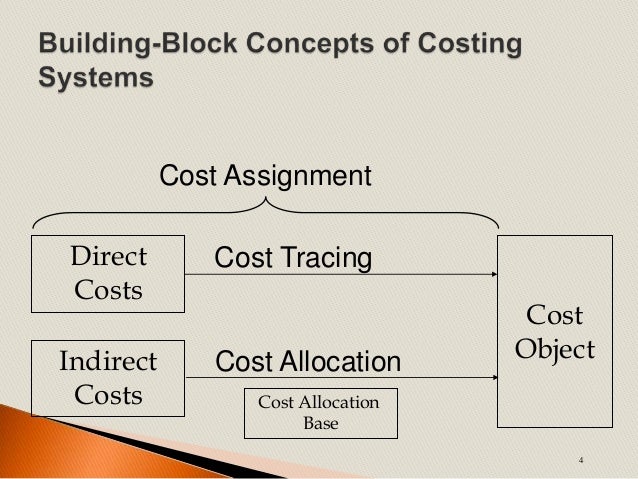
1. For a start, a revision of the "cost object" concept (video); a slide on its basic ideas.
2. The following notes will be covered:
Some more complicated concepts to consider:
(1) What is avoidable fixed cost (video)?
(2) What are committed and discretionary fixed costs (video)?
(3) Estimate mixed costs with the high-low method (video)?
1. For a start, a revision of the "cost object" concept (video); a slide on its basic ideas.
2. The following notes will be covered:
- Direct vs indirect cost (2 pages); also note the different types of cost assignment.; the concept with regard to product cost (slide).
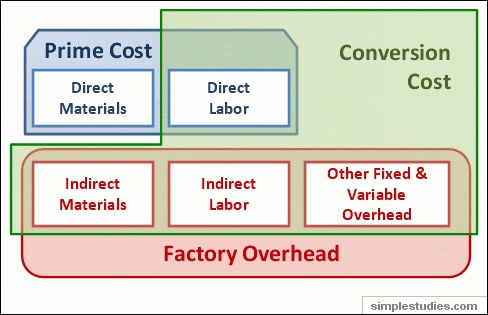
- Prime costs and conversion costs (1 page); a diagram for clarification.
- Specific cost terms - explanation (3 pages)
- Cost classification (2 pages)
- Cost classification II (2 pages)
- Part 2 note on cost driver (3 pages); some ABC examples.
- Cost behavior calculation examples (2 pages); a closer look at the concept of fixed cost (video), considering the factor of relevant range.
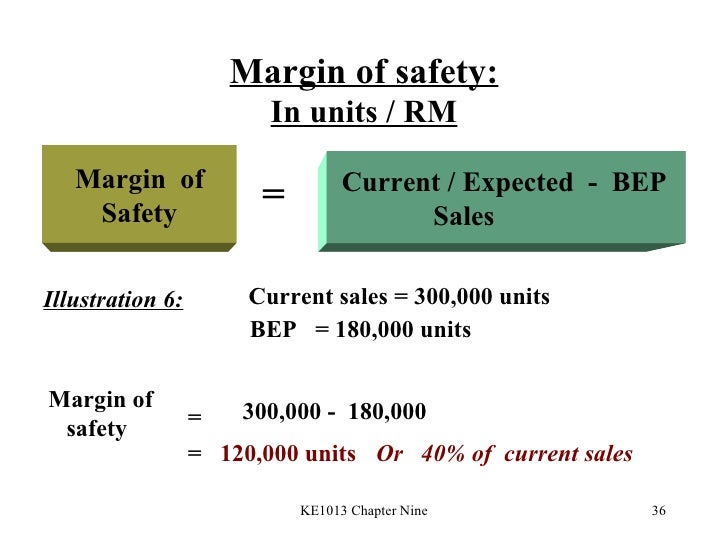
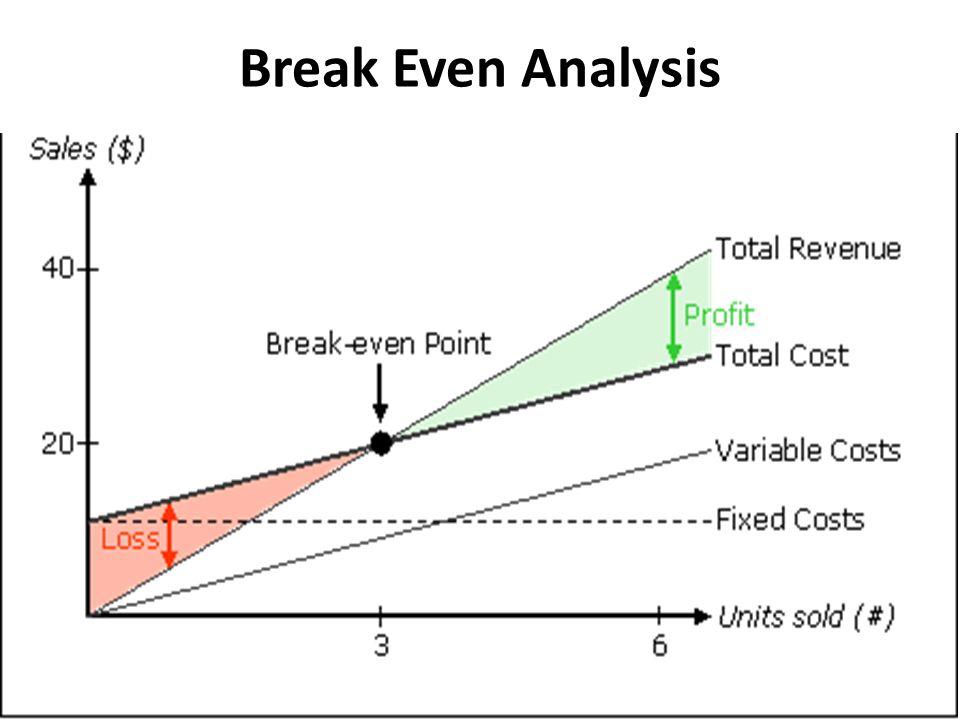
- Breakeven analysis (6 pages): the formulas; [a related YouTube video]; breakeven analysis (b) margin of safety (2 pages) [a related YouTube video]; also note breakeven analysis diagram and two examples: example 1; example 2. {Note that breakeven analysis is covered in a slightly broader topic called CVP analysis}.
- Part 2 exercises on cost terms [Questions and answers]
Some more complicated concepts to consider:
(1) What is avoidable fixed cost (video)?
(2) What are committed and discretionary fixed costs (video)?
(3) Estimate mixed costs with the high-low method (video)?
3. Videos to review in class
4. Due to some doc processing errors, a few of the docs will only be distributed to the class on Jan. 21, 2018. The docs can also be found in Facebook subject group.
Typology of plagiarism and related practices
Prepared by Joseph, K.K. Ho Dated: January
15, 2018
Using Ho, J.K.K. 2017. "A survey study of perceptions on the scholar-practitioner
notion: The Hong Kong case" Joseph KK
Ho e-resources blog December 1 (url address: http://josephho33.blogspot.hk/2017/12/a-survey-study-of-perceptions-on.html).
Type 1: classical plagiarism: no quotation marks and
no citations
E.g. content coming from http://josephho33.blogspot.hk/2017/12/a-survey-study-of-perceptions-on.html:
Scholar-practitioners are people who are
intellectually competent as well as active in pursuing and sharing theoretical
knowledge with high practical value to others (Ho, 2014a). For them,
scholar-practitioner is their professional identity. Some writers as well as
universities that promote their Ph.D. and D.B.A. programmes also specify that
scholar-practitioners should hold a doctorate degree (Ho, 2014a). The reason is
that these programmes provide vigorous education on research methods and
intellectual learning in business management, e.g., Chan (2008), to produce
scholar-leaders (Cafolla, 2012). Dwelling on scholar-practitioners in business
management, Ho (2014a) points out that, being active in both the academic and
business communities creates unique complexity to the career development and
work-life balance of scholar-practitioners, e.g., experience of role conflicts.
Such complexity facing scholar-practitioners has been studied in the academic
literature under four main topics (Ho, 2014a): (i) the profiles and career
development patterns of scholar-practitioner, (ii) the role conflicts and
professional development challenges, (iii) ways to bridge knowledge-action gap
in management, and (iv) formulation of appropriate approaches and contents of
business management education. In this regard, a closely related research theme
is on the work-life balance management in managerial intellectual learning (Ho,
2014d).
Type 2: near-plagiarism: Quotation
marks added but no citations:
"Scholar-practitioners are people who are intellectually
competent as well as active in pursuing and sharing theoretical knowledge with
high practical value to others (Ho, 2014a). For them, scholar-practitioner is
their professional identity. Some writers as well as universities that promote
their Ph.D. and D.B.A. programmes also specify that scholar-practitioners
should hold a doctorate degree (Ho, 2014a). The reason is that these programmes
provide vigorous education on research methods and intellectual learning in
business management, e.g., Chan (2008), to produce scholar-leaders (Cafolla,
2012). Dwelling on scholar-practitioners in business management, Ho (2014a)
points out that, being active in both the academic and business communities
creates unique complexity to the career development and work-life balance of
scholar-practitioners, e.g., experience of role conflicts. Such complexity
facing scholar-practitioners has been studied in the academic literature under
four main topics (Ho, 2014a): (i) the profiles and career development patterns
of scholar-practitioner, (ii) the role conflicts and professional development
challenges, (iii) ways to bridge knowledge-action gap in management, and (iv)
formulation of appropriate approaches and contents of business management
education. In this regard, a closely related research theme is on the work-life
balance management in managerial intellectual learning (Ho, 2014d)".
Type 3a: Abuse of quotation I: Quotation
marks and citations provided, but the size of the copied content large; a few instances
"Scholar-practitioners are people who are intellectually
competent as well as active in pursuing and sharing theoretical knowledge with
high practical value to others (Ho, 2014a). For them, scholar-practitioner is
their professional identity. Some writers as well as universities that promote
their Ph.D. and D.B.A. programmes also specify that scholar-practitioners
should hold a doctorate degree (Ho, 2014a). The reason is that these programmes
provide vigorous education on research methods and intellectual learning in
business management, e.g., Chan (2008), to produce scholar-leaders (Cafolla,
2012). Dwelling on scholar-practitioners in business management, Ho (2014a)
points out that, being active in both the academic and business communities
creates unique complexity to the career development and work-life balance of
scholar-practitioners, e.g., experience of role conflicts. Such complexity
facing scholar-practitioners has been studied in the academic literature under
four main topics (Ho, 2014a): (i) the profiles and career development patterns
of scholar-practitioner, (ii) the role conflicts and professional development
challenges, (iii) ways to bridge knowledge-action gap in management, and (iv)
formulation of appropriate approaches and contents of business management
education. In this regard, a closely related research theme is on the work-life
balance management in managerial intellectual learning (Ho, 2014d)" (Ho, 2017).
Type 3b: Abuse of quotation I: Quotation
marks and citations provided, but the size of the copied content large; many instances
Implications of plagiarism and related
practice types
Implications
|
Type 1
|
Type 2
|
Type 3
|
|||
Turnitin report:
Coloring of copied content
|
Yes
|
No
|
No
|
|||
Effect on similarity score of Turnitin
|
Increase
|
NIL
|
NIL
|
|||
No. of instances
|
Small
|
Large
|
Small
|
Large
|
Small
|
Large
|
Impact on plagiarism judgement (provisional rating[1]):
(0: not serious
5: very serious)
|
4
|
5
|
3
|
4
|
2
|
3
|
Meaning of citation (re: http://www.plagiarism.org/article/what-is-citation)
A
"citation" is the way you tell your readers that certain material in
your work came from another source. It also gives your readers the information
necessary to find that source again, including:
- information about the author
- the title of the work
- the name and location of the company
that published your copy of the source
- the date your copy was published
- the page numbers of the material you
are borrowing
Sunday, 14 January 2018
Some examples of interpretation of p-values in hypothesis testing
Some examples of interpretation of p-values in hypothesis testing - as a reference for Independent Study:
Comments on the
statistics
|
x variables
|
b value and [comments]
|
p-value and [comments]
|
|
Gender
(x1)
|
0.0842
[Gender has slightly positive correlation with the y variable.]
|
0.5552
(or 27.7620% on each
side)
[With the critical
value of 5% (or 2.5% on each side), the null hypothesis that the b value be
zero is not rejected.]
|
|
Age
group (x2)
|
-0.0171
[Age group has very weak positive correlation with the y
variable.]
|
0.0591
(or 2.9563% on each
side)
[With the critical
value of 5% (or 2.5% on each side), the null hypothesis that the b value be
zero is not rejected.]
|
|
Education
background (x3)
|
-0.1401
[Education background has weak negative correlation with the y
variable.]
|
0.22385
(or 11.1925% on each
side)
[With the critical
value of 5% (or 2.5% on each side), the null hypothesis that the b value be
zero is not rejected.]
|
|
Self-perceived
social class (x4)
|
0.0079
[Self-perceived social class has some negative correlation with the y
variable.]
|
0.9547
(or 47.7361% on each
side)
[With the critical
value of 5% (or 2.5% on each side), the null hypothesis that the b value be
zero is not rejected.]
|
|
Familiarity
with the HKATRP (x5)
|
-0.1302
[Familiarity with the HKATRP has weak negative correlation with the y
variable.]
|
0.2464
(or 12.3221% on each
side)
[With the critical
value of 5% (or 2.5% on each side), the null hypothesis that the b value be
zero is not rejected.]
|
|
Confidence
in project management competence of AAHK (x6)
|
0.5169
[Confidence in project management competence of AAHK has some positive correlation with the y
variable.]
|
0.0002
(or 0.012% on each
side)
[With the critical
value of 5% (or 2.5% on each side), the null hypothesis that the b value be
zero is rejected.]
|
|
Confidence
that a satisfactory airspace arrangement will be worked out (x7)
|
0.2081
[Confidence
that a satisfactory airspace arrangement will be worked out has some positive correlation with the y
variable.]
|
0.1382
(or 6.9107% on each
side)
[With the critical
value of 5% (or 2.5% on each side), the null hypothesis that the b value be
zero is not rejected.]
|
|
Perceived
sufficiency of project information released (x8)
|
0.0346
[Perceived sufficiency of project information
released
has some positive
correlation with the y variable.]
|
0.8438 (or 42.1908% on
each side)
[With the critical
value of 5% (or 2.5% on each side), the null hypothesis that the b value be
zero is not rejected.]
|
Reference
Main items to cover in an Independent Study proposal Jan 2018
Main items to cover in an IS proposal [1,000 words, excluding the contents of "preliminary reference list" and "title
of the report"] for Jan 2018
Title that should closely mirror
the content of your proposal
1. Introduction containing:
· Problem or issue that is
going to be addressed.
· What is going to be
included and what is going to be excluded (scope of the study)
· Purpose of the study –who will the research benefit and its
unique features.
· Why you have selected the
topic.
· Research Questions/ Hypotheses.
·
Theoretical
perspective
2. Review of the literature:
· Indicates the literature
base for the work and seminal works.
·
This section may be used to
justify the proposed research, e.g. it may identify a gap in the literature
3. The proposed research method
·
Overall research method,
e.g. quantitative research on certain secondary data to test certain hypothesis
and answer certain research questions
·
Data gathering approach,
e.g. secondary data from what data sources, target sample and sample size
·
Data analysis approach, e.g.
correlation analysis on secondary data, hypothesis-testing.
·
Ethical and aspect aspects
of the research method to be used
4. Action plan
·
A time schedule
for the research.
A preliminary reference list
***** As a proposal, it does not have findings,
analysis, conclusions and recommendations; this is because the project is still
at the planning stage.
Saturday, 13 January 2018
Ways to formulate an Accounting and Finance topic
Ways to formulate an Accounting and Finance topic in Independent study:
1. Study academic journals to practice intelligent copying;
2. Formulate a research theme as follows:
a. An evaluation of influencing factors on ___________. (e.g. capital structure, dividend policy, etc) for the __________ sector(s) (e.g. manufacturing, retail sectors, etc)
b. An evaluation of how _________ (e.g. interest rate, exchange rate movement, capital structure)
affects the financial performance of companies in the ________ industries.
c. An evaluation of how the gender composition of board of directors affect _______ [dividend payout ratio or capital structure] of companies in the __________ industries.
d. A comparison of how ______ (e.g. capital structure) influences ______ (e.g. earning per share) between the manufacturing and banking sectors in Hong Kong.
The chosen topic chiefly reflects the research philosophy of positivism (a related video on research philosophy).
3. Options to consider in the formulation of topics:
a. company profiles (e.g. family business, large-cap/ small cap companies, established companies, young companies)
b. board of directors profile,
c. economic factors, (e.g. interest rate, inflation rate, GDP growth rate, exchange rate movement, commodity price movements)
d. financial ratios (e.g., gearing ratios, liquidity ratios)
e. industry sectors (e.g. banking, property development, etc) ,
f. specific events and programmes (e.g., financial crisis, corporate governance scandals, taxation policy change, CSR programmes, ISO programmes, merger and acquisition).
4. Topic formulation for IS should also take into consideration the following concepts:
a. hypothesis
b. independent and dependent variables
c. correlation analysis
d. literature review that informs (a), (b), (c) discussion.
5. An academic journal article for illustration; another one for illustration.
1. Study academic journals to practice intelligent copying;
2. Formulate a research theme as follows:
a. An evaluation of influencing factors on ___________. (e.g. capital structure, dividend policy, etc) for the __________ sector(s) (e.g. manufacturing, retail sectors, etc)
b. An evaluation of how _________ (e.g. interest rate, exchange rate movement, capital structure)
affects the financial performance of companies in the ________ industries.
c. An evaluation of how the gender composition of board of directors affect _______ [dividend payout ratio or capital structure] of companies in the __________ industries.
d. A comparison of how ______ (e.g. capital structure) influences ______ (e.g. earning per share) between the manufacturing and banking sectors in Hong Kong.
The chosen topic chiefly reflects the research philosophy of positivism (a related video on research philosophy).
3. Options to consider in the formulation of topics:
a. company profiles (e.g. family business, large-cap/ small cap companies, established companies, young companies)
b. board of directors profile,
c. economic factors, (e.g. interest rate, inflation rate, GDP growth rate, exchange rate movement, commodity price movements)
d. financial ratios (e.g., gearing ratios, liquidity ratios)
e. industry sectors (e.g. banking, property development, etc) ,
f. specific events and programmes (e.g., financial crisis, corporate governance scandals, taxation policy change, CSR programmes, ISO programmes, merger and acquisition).
4. Topic formulation for IS should also take into consideration the following concepts:
a. hypothesis
b. independent and dependent variables
c. correlation analysis
d. literature review that informs (a), (b), (c) discussion.
5. An academic journal article for illustration; another one for illustration.
Subscribe to:
Posts (Atom)